Nyāgaḥmaṇi
Curated by Pabitra Bajracharya
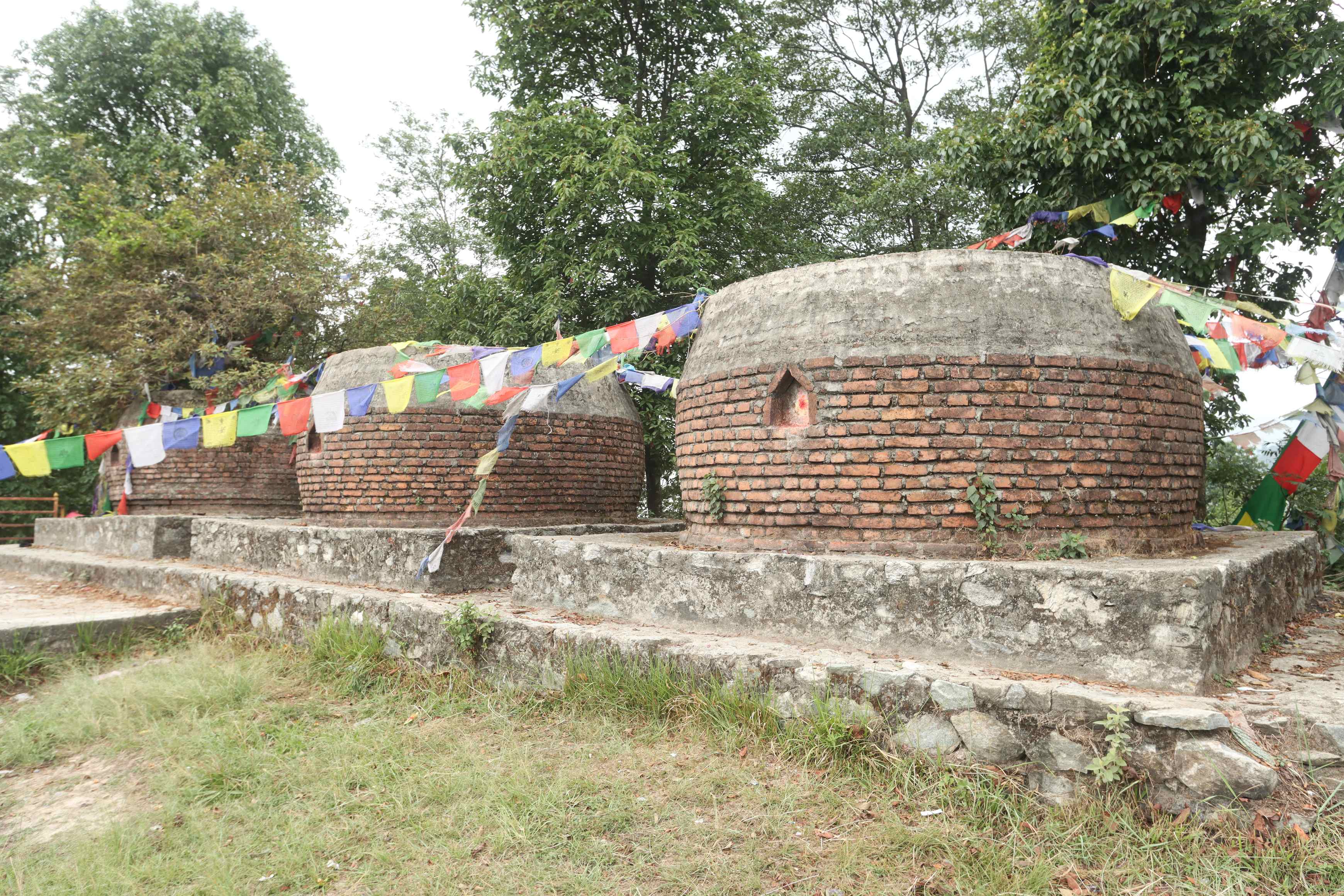
Situated along the ridge of Pā̃camāne hill northwest of Kathmandu, the Nyāgaḥmaṇi caityas (DANAM ID: TRK0020) mark one of the four historic mountain passes into the Kathmandu Valley, known collectively as the “Cāra Bhañjyāṅga.” Traditionally, travelers used this route to journey westward through Jītapuraphedī and onward to Tibet via Kerung in Rasuwa. Although the name “Pā̃camāne” means “five caityas” (“mane” being a Tamang term for caitya), only three survive today; two were destroyed by a landslide, and a nearby clay mound is believed to preserve their remains. The present structures, rebuilt with brick and concrete, resemble local grain-measuring pots rather than traditional Buddhist caityas. Local traditions preserve two accounts of their origin. One attributes the caityas to Atiśā Dīpaṅkara Śrījñāna, who is believed to have built five caityas at the pass while traveling to Tibet in 1041 CE. Historical paintings and maps from the 18th and 19th centuries also depict the five caityas. Another tradition links them to the Sino-Nepal wars (1788–1792 CE), claiming they commemorated Chinese or Tibetan emissaries who died during the conflict. Tibetan soldiers accompanying the Chinese forces may have renovated the earlier caityas out of reverence for Atiśā. By the late 20th century, the caityas had deteriorated considerably. Restoration began in 2014 CE under Nirmalaratna Tulādhara and the Pā̃camāne Jīrṇoddhāra Samāja, supported by donations from a Malaysian Rinpoche. Today, the site attracts occasional Newar and Tibetan devotees, although no daily rituals are performed. For more details on this monument and others, please refer to the DANAM database.