
Śāntipura Phalcā 2
Curated by Pabitra Bajracharya
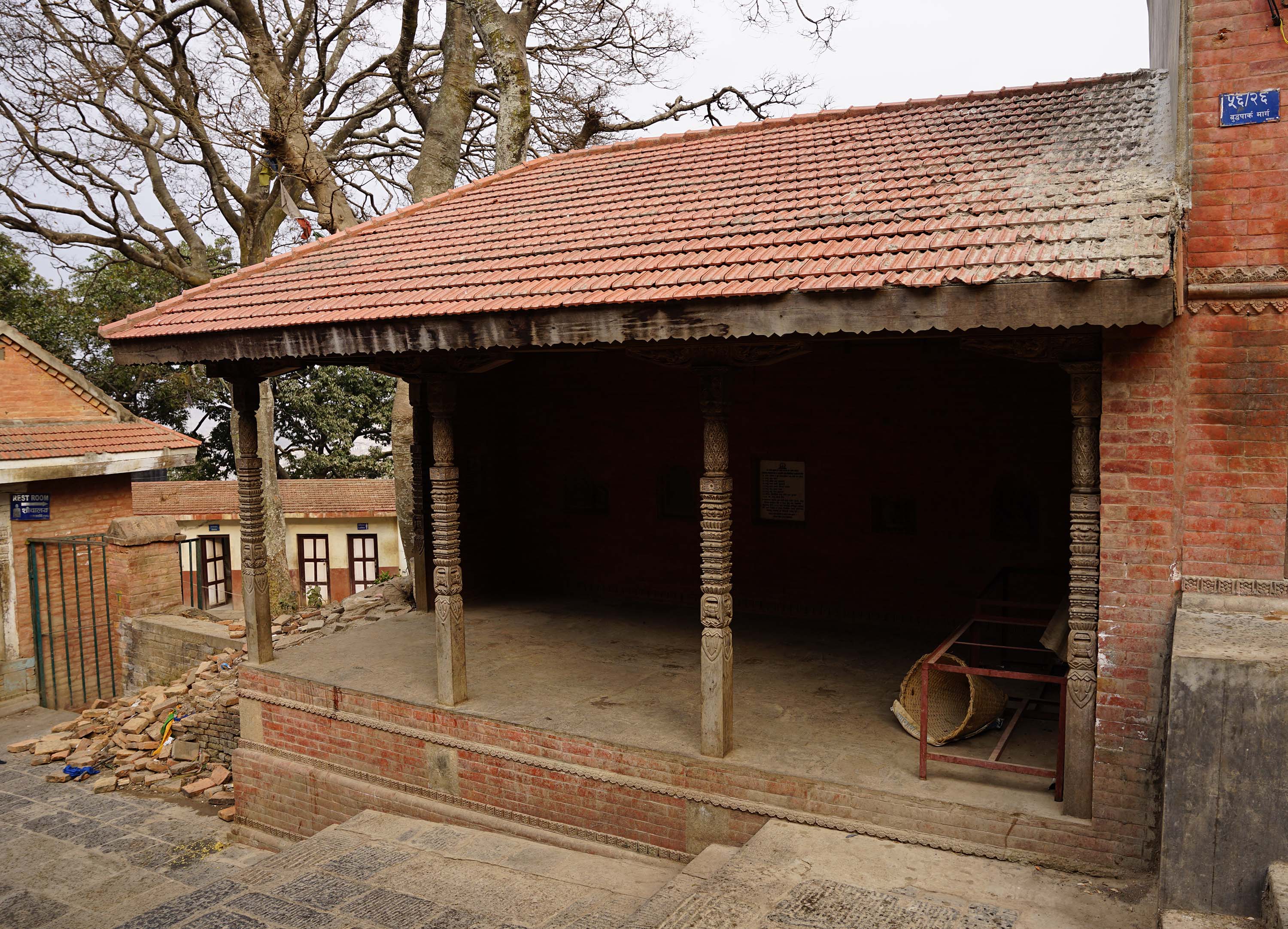
This Phalcā bears no specific historical name. Located a few meters from the Śāntipura (KAT3260), it is referred to as “Śāntipura Phalcā 2 (DANAM ID: KAT3262)” for documentation purposes. It faces west toward the Śāntipura and stands east of Śāntipura Phalcā 1 (KAT3261). An inscription records that Mohanavīrasiṃha Tulādhara of Asana Ṭola, Kathmandu, constructed the Phalcā with his family in 1959 CE (NS 1079). It also states that anyone may renovate the structure if it collapses or is damaged. It's reconstruction began shortly before the 2015 earthquakes by the Svayambhū Vyavasthāpana ra Saṃrakṣaṇa Mahāsamiti. By then, the brick walls—built with new dāciaḥpā and māaḥpā bricks set in cement mortar—were completed and suffered no damage. After a pause of about a year due to the earthquakes, reconstruction was completed around October 2016 CE. The Phalcā has machine-made ā̃ypā roof tiles, unusually wide bays, and disproportionately thin pillars. Its carved wooden columns date to the mid-20th century. The structure lacks lākāṃsĩ at the pillar bases and the low brick wall, possibly with blind windows, between the roof and pillars. Statues and inscriptions found around the Śāntipura area are displayed on the rear wall. One inscription dated 1800 CE (NS 920) records Harinārāyaṇa Rañjitakāra of Bākunani, Mañjuśrī Ṭola, Patan, donating land for anniversary rituals. Another, dated 1798 CE (VS 1855), notes Kājī Bandhu Rāṇā and Kajinī Jayakumārī of Gorakhā (?) constructing a stone caitya at Svayambhunath. The Phalcā was likely built as a resting place for devotees visiting the Śāntipura, providing space to partake in samaybaji or prasāda after worship (local knowledge; Buddhācārya, male, age 69). For more details on this monument and others, please refer to the DANAM database.