
Tyāṅgā Bhairava
Curated by Pabitra Bajracharya
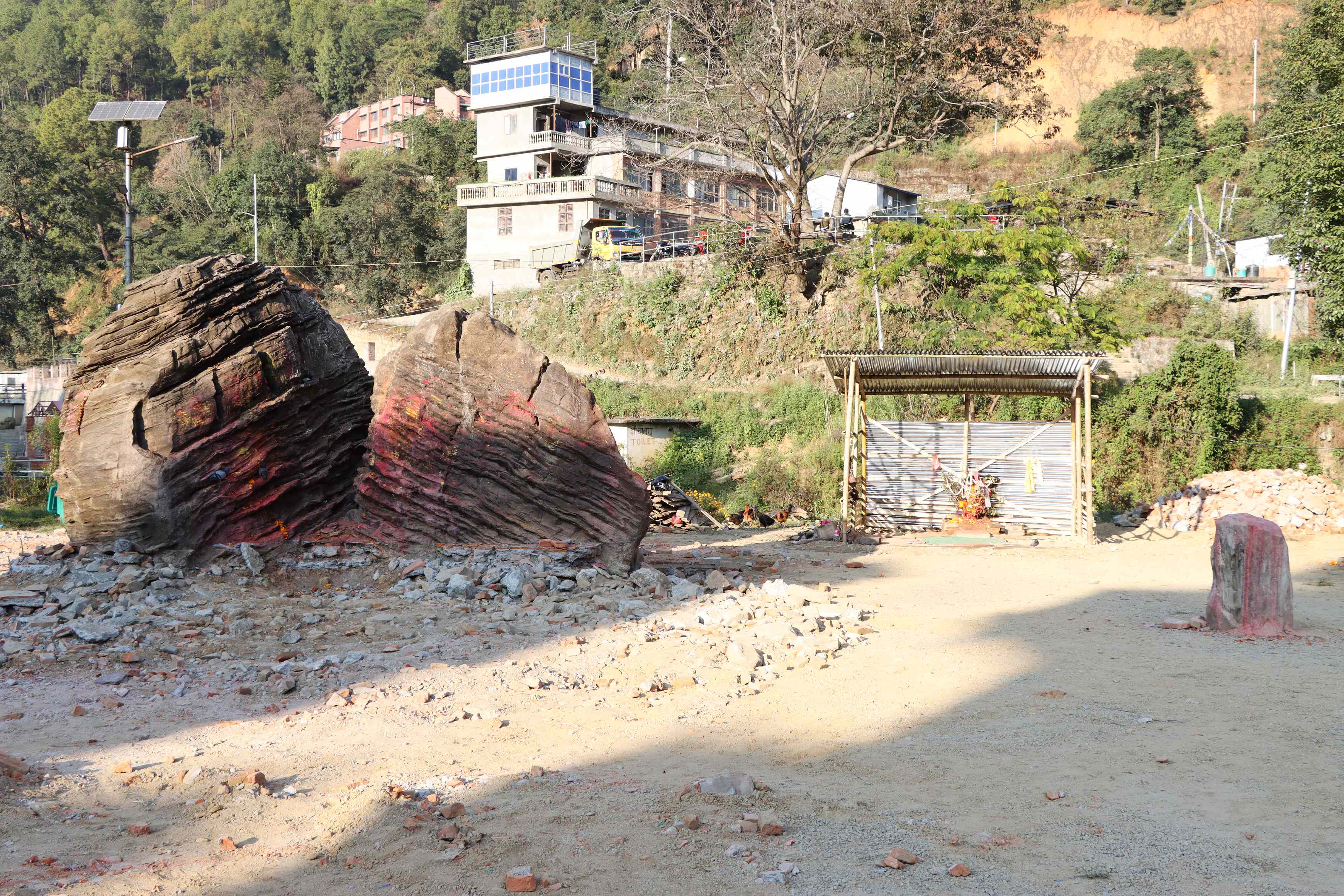
Tyāṅgā Bhairava’s (DANAM ID: LEL0030) sacred site lies at Triveṇīghāṭa in Lele, Lalitpur District, where the Līlāvatī, Prabhāvatī, and Kalāvatī rivers meet. Locally known as Tyāṅkā or Tīkā Bhairava, he has no anthropomorphic image; worship centers on an earthen ghyāmpo, and he is addressed as Kvaṃdyaḥ. Within the Aṣṭamātr̥kā–Aṣṭabhairava system, he is identified as Caṇḍa Bhairava. The shrine was severely damaged by floods on 28 September 2024 (VS 2081 Āśvina 12), which swept away its superstructure. As of November 2025, Tyāṅgā Bhairava is housed in a temporary shelter behind the Rāmeśvara Śivaliṅga, which remains in situ despite repeated flood damage. Rāmeśvara is identified in Purāṇic sources as the fourteenth of Nepal’s sixty-four Śivaliṅgas and is linked to Paraśurāma’s austerities at this Triveṇī tīrtha. Local legends associate the site with Rāvaṇa, who split the manifested stone liṅga, and with Tyāṅgā Bhairava as its guardian, hence the name Tīkā Bhairava. The area was formerly known as Prabhātīrtha and is connected with myths of Sījñī and Prabhādevī. Tyāṅgā Bhairava is closely linked with Buṅgadyaḥ (Rato Matsyendranātha) as one of the four attendant Bhairavas. Priestly service is performed by Karmācāryas, with pūjā now held twice weekly. Annual rituals include the Caitra Śukla full-moon khaṭa jātrā, Śrāvaṇa offerings (Chusyāmusyā Nakegu), and rain-invoking worship. Reconstruction of the shrine is underway with provincial support. For more details on this monument and others, please refer to the DANAM database.