
Naravadeśvara Mandira
Curated by Pabitra Bajracharya
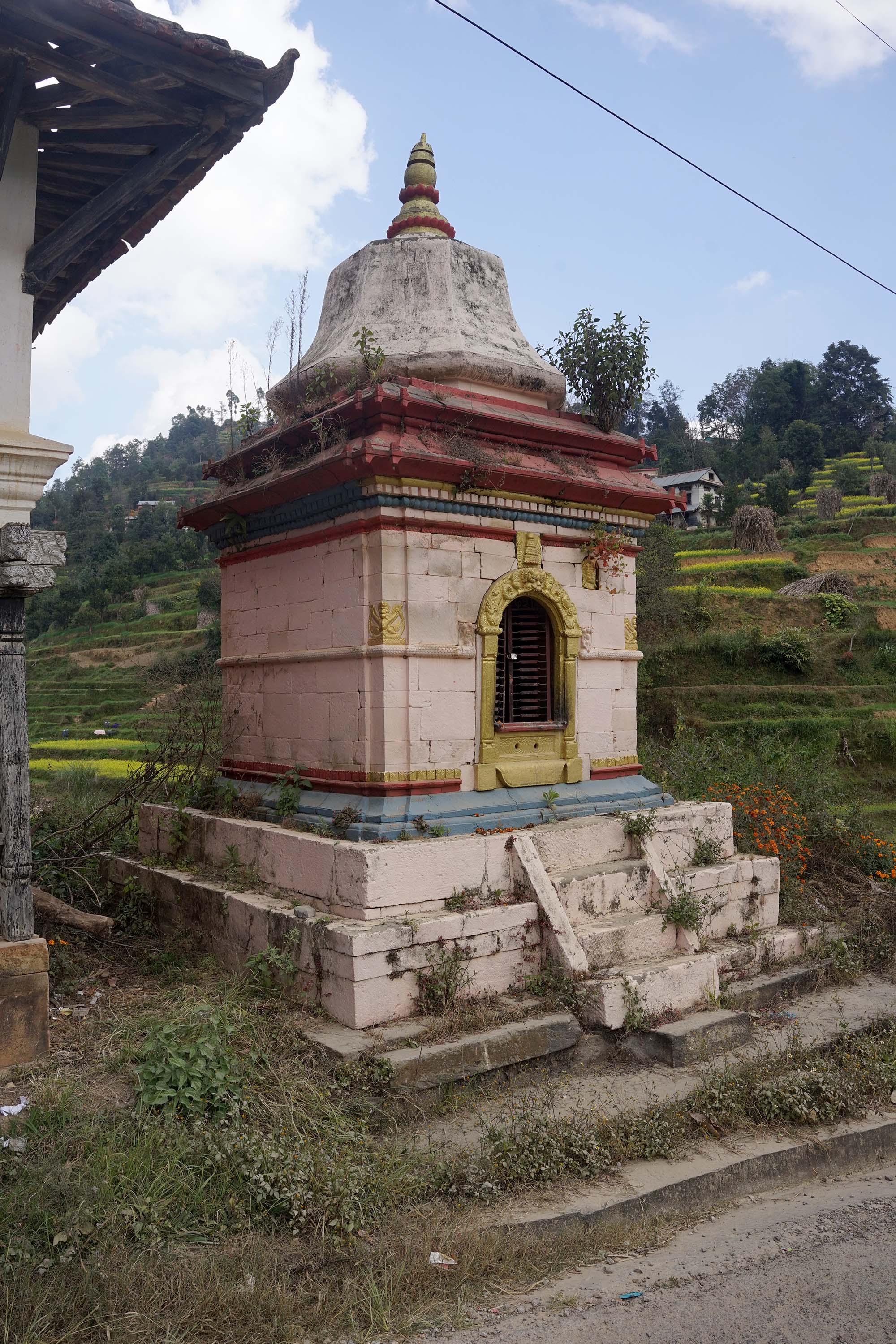
During the reign of Candraśamśera, Pṛthvīvilāsa Sāpakoṭā, who was then known as Kālesāhu, constructed this Śivālaya (DANAM ID: PNT0300) together with a sataḥ at his lineage deity shrine. Parkhālacaura, the confluence of the Rosī and Ghyālkhu rivers, is the kuladevatāthāna of the Sāpakoṭā lineage. During the latter Rāṇā period, the merchant Pṛthvīvilāsa Sāpakoṭā built a small Śivālaya here on a three-tiered plinth, with a five-tiered staircase, south-facing doorway, chepu, toraṇa, Bhairava face on the southern wall, and a bell-shaped superstructure with a stone pinnacle. A Śivaliṅga with metal facial covering and the Śiva Pañcāyana deities are installed within. An inscription dated 1914 CE (VS 1971) records the foundation of the shrine and a sataḥ, the endowment of guṭhī land, ritual provisions, and the naming of the liṅga as Naravadeśvara. Whether the liṅga was pre-existing or newly installed is unclear. The shrine dates to the reigns of Candraśamśera and Tribhuvana. Although it survived the recent great earthquake, cracks and vegetation are visible as of 2025 CE. Daily worship continues through the guṭhī system by a Gautama-lineage Brahmin, while festival rituals mentioned in the inscription have ceased. Annual kulapūjā is still performed on the Jyeṣṭha full moon by the Sāpakoṭā lineage, accompanied by cleaning, painting, and collective worship (Source: temple priest). For more details on this monument and others, please refer to the DANAM database.