
Hāsadyaḥ Bhairava Mandira
Curated by Pabitra Bajracharya
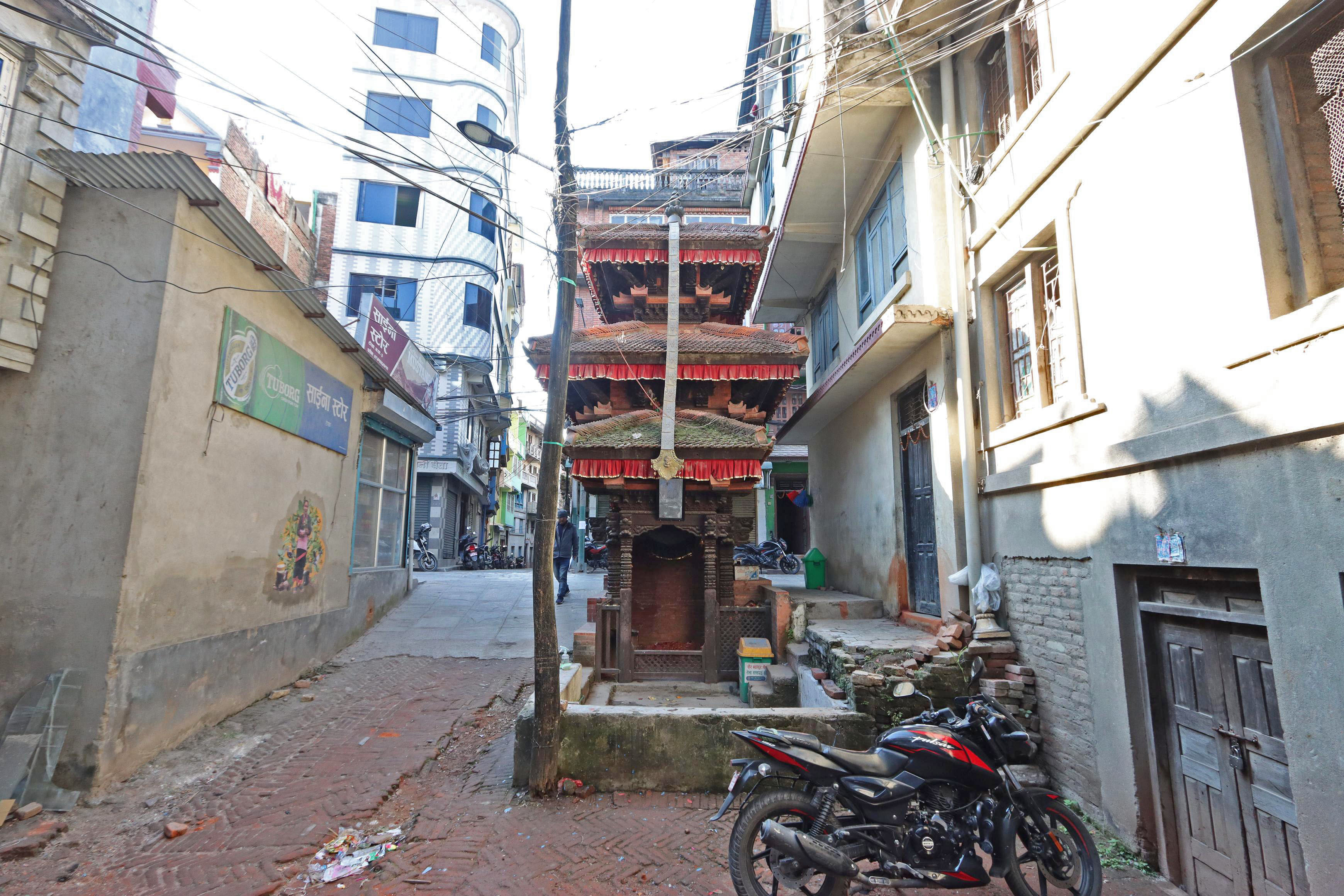
Along the north–south main road of Hāsal Ṭola in Tokha stands a small but distinctive tiered temple built over an abstract Bhairava stone situated about five feet below road level. Though appearing to face the street, the temple actually faces inward toward the sanctum enclosing the stone, making the structure effectively three-storied when the lower level is counted. Two tiers with jhĩgaṭī roofing rise above the road, crowned by a metal pinnacle, and an additional roof projects toward the façade. The sanctum houses a large natural stone worshipped as Hāsadyaḥ (Seto Bhairava) (DANAM ID: TOK0080), along with a stone image of Gaṇeśa. Fine wooden pillars, struts, cornices, and dhaliṃmvaḥ display high-quality craftsmanship. Formerly only the abstract stone existed here. In 2024 CE (VS 2080), the ward chairman of Tokha Municipality constructed the present temple, which stands out among recent pagoda shrines for its correct proportions and traditional technique. A painted white-faced Bhairava image was added to the roadside wall, reflecting the belief in a white-complexioned Bhairava. Local legend holds that this Bhairava once demanded daily human sacrifice until subdued by tantric means, after which he became known as Seto Bhairava, a name attested in a 1921 CE bell inscription. During Indra Jātrā, a large Bhairava mask is displayed here for eight days. Although no formal guṭhī exists, the site remains central to local rituals, including Dashain sacrifices, household rites, and the annual halt of Masānakālī’s chariot. Oversight is managed by the Hāsadyaḥ Guṭhī Khalaḥ. For more details on this monument and others, please refer to the DANAM database.