
Cvaṅā Gaṇeśa Mandira
Curated by Pabitra Bajracharya
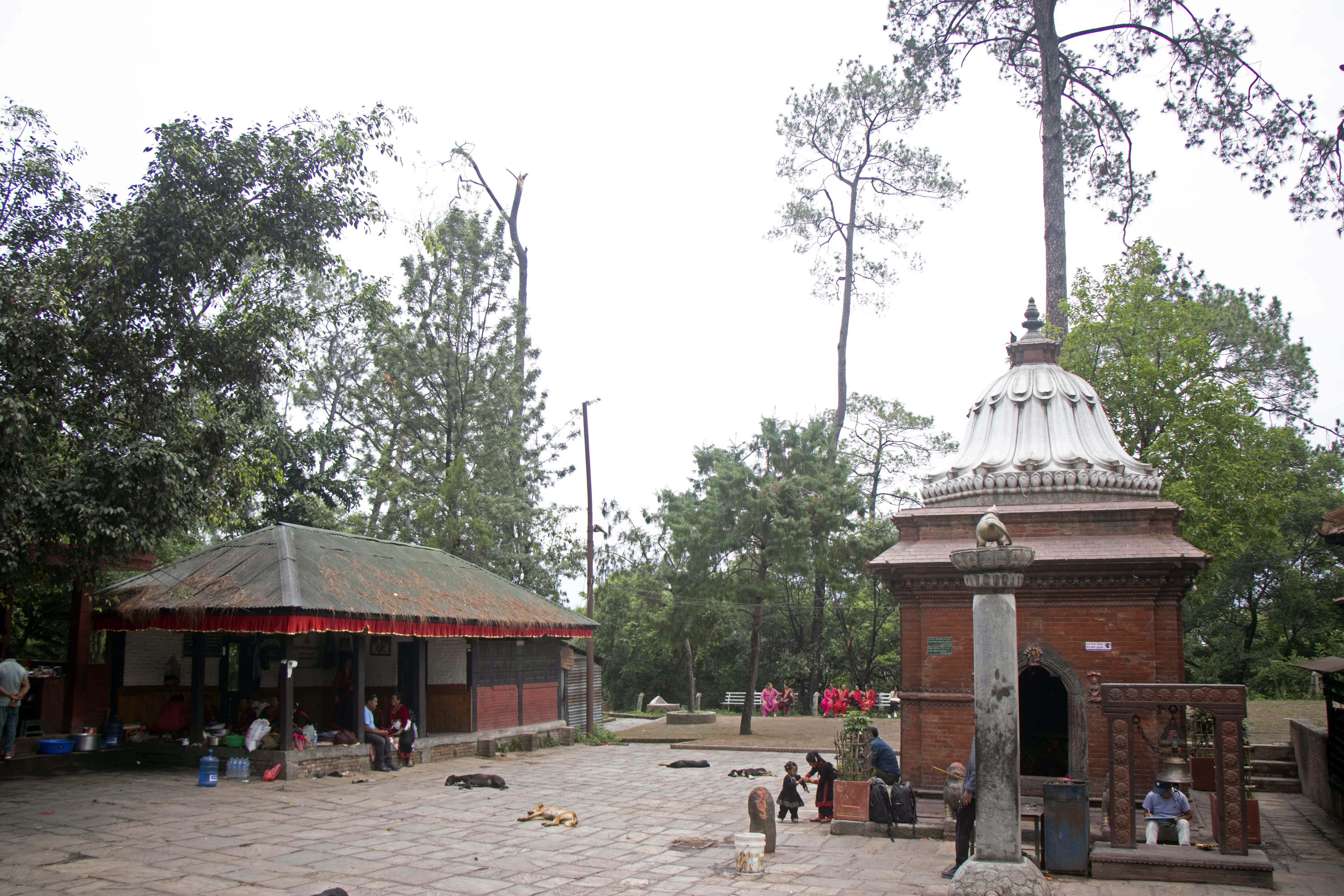
The Cvaṅā Gaṇeśa Temple (DANAM ID: BKT0840) stands on a hillock at Sallāghārī, facing south and constructed in the domed style. Its name derives from the Newari term Cvaṅāpā, which refers to the elevated mound on which it is situated. The deity, known as Cvaṅā Gandyaḥ, is worshipped in the form of a sacred stone enshrined within a small shrine. The entrance features nāgapāśa carvings, a pair of 16th-century stone dvīpi (lion) sculptures, and a four-armed image of Gaṇeśa above the doorway. The temple precinct also contains a stone gajura, resting platforms, and mature trees. Although no inscription survives, the temple is traditionally attributed to the mid-12th century Malla period. It is regarded as one of Bhaktapur’s Aṣṭagaṇeśa shrines, established to protect the city’s western boundary. Stone steps were added in 2001 (VS 2058), the temple was renovated in 2009 (VS 2066), and a commemorative pillar was erected in 2018 (VS 2074). Cvaṅā Gaṇeśa is revered as the guardian deity of western Bhaktapur and is closely associated with agricultural prosperity. The temple also serves as an important ritual centre during the Navadurgā procession, Ghaṇṭākarṇa festival, Biskāḥ Jātrā, and the annual devālī worship of several Newar communities. For more details on this monument and others, please refer to the DANAM database.